
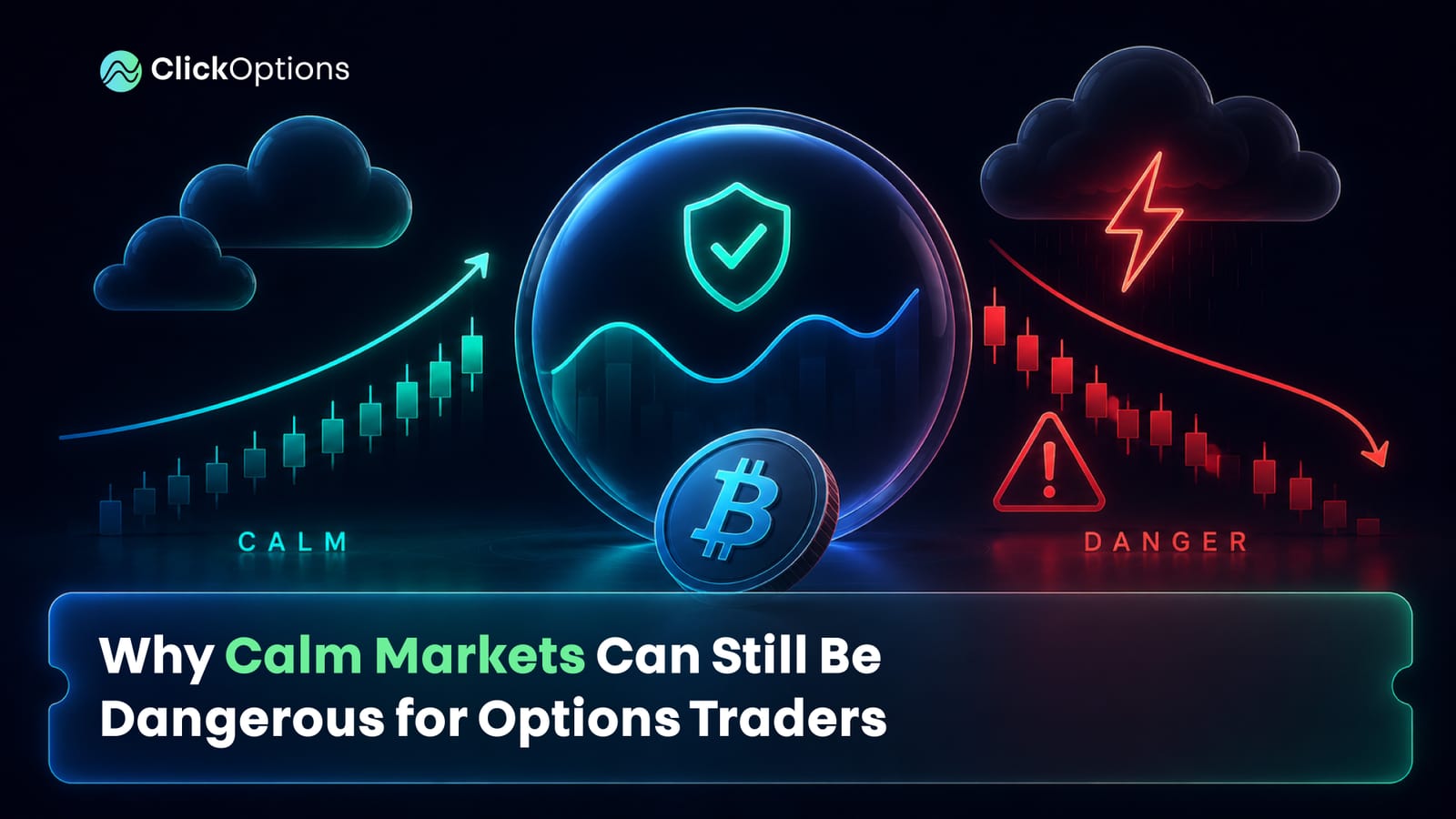
Calm markets can feel safe.
Prices rise steadily. Volatility stays low. Traders become more confident. Some start buying more calls and fewer protective puts because the market appears unlikely to fall.
That is often when risk is easiest to ignore.
What Market Volatility Means
Volatility measures how much prices move.
Low volatility usually means the market has been moving in a calmer and more predictable way. High volatility means prices are moving more sharply.
But low volatility does not mean risk has disappeared.
Markets can change quickly after economic news, earnings, interest-rate decisions, geopolitical events, or sudden changes in investor sentiment.
Why Traders Buy Fewer Protective Puts
During a strong rally, traders often feel less need for downside protection.
Protective puts cost money, and they may expire without value if the market keeps rising. Some investors stop buying them because the protection feels unnecessary.
At the same time, traders may buy more calls to participate in further gains.
This can leave the market crowded on one side. If prices suddenly fall, traders may rush to reduce risk at the same time, making the move more disorderly.
Why Chasing Calls Can Be Risky
Calls can gain quickly when prices rise, but they can also lose value quickly.
A trader who buys after a long rally may be entering when expectations are already high. If the market slows down, moves sideways, or falls, the option may lose value because of time decay and changing volatility.
Being bullish is not enough.
The timing, strike price, expiry, premium, and position size still matter.
Where ClickOptions Fits In
On ClickOptions, traders can take positions through crypto options and prediction options with defined conditions.
Calm market conditions may make a certain outcome appear more likely. But unexpected news can still change crypto prices, probabilities, and trader sentiment very quickly.
A defined setup can make the amount at risk clearer before entry. It does not guarantee that the expected outcome will happen.
Smaller Positions Can Help
One of the simplest ways to manage uncertainty is to use smaller positions.
Traders should know the maximum amount they can lose before entering. They should also avoid risking more simply because recent markets have been calm.
A basic trade plan should include:
- the reason for entering;
- the maximum loss;
- the expiry or settlement time;
- the exit condition;
- the position size.
Calm conditions are not a reason to remove risk controls.
Final Thought
Markets often feel safest after they have already risen.
That feeling can create overconfidence, call chasing, and less demand for protection. When sentiment changes, the move can happen faster than traders expect.
The better question is not, “Does the market look calm?”
It is:
“Am I prepared if it suddenly stops being calm?”
This article is for educational purposes only and should not be considered financial advice.