
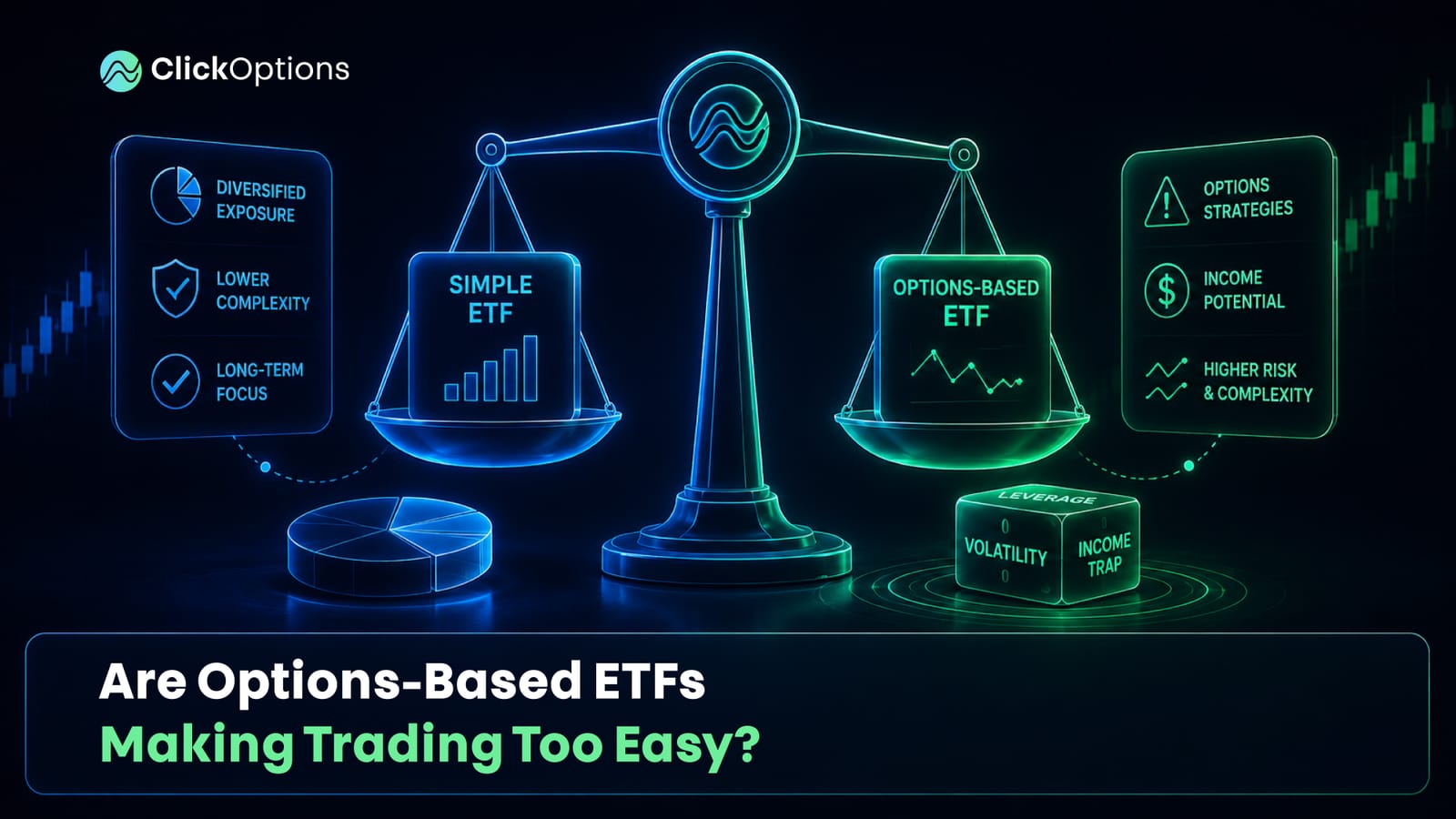
ETFs used to feel simple.
For many retail investors, an ETF meant broad exposure to the S&P 500, Nasdaq, bonds, commodities, or a basket of stocks. The appeal was clear: one ticket, instant diversification, easy access.
That world still exists.
But a new category of ETFs is becoming much more complex.
Today, retail investors can find ETFs tied to options strategies, covered calls, leverage, single stocks, cryptocurrency, volatility, income strategies, and even prediction-market-style outcomes. These products can make advanced trading strategies easier to access, but they can also make the risk harder to see.
That is why regulators are paying attention.
On June 30, 2026, the SEC requested public comment on “novel” exchange-traded funds that invest in innovative asset classes or use new investment strategies. The SEC said the request focuses on supporting innovation while protecting investors and maintaining fair, orderly, and efficient markets.
Reuters reported that the review comes as complex ETF products linked to leverage, options, cryptocurrency, and prediction markets continue to expand. It also noted that increasingly risky ETF structures, including single-stock leveraged ETFs and covered-call strategies, have become more common.
The main question is simple:
Are these products helping retail traders access useful strategies, or are they making complex trading feel too easy?
What Are Options-Based ETFs?
Options-based ETFs are funds that use options as part of their strategy.
Some use options to generate income. Some use options to reduce downside exposure. Some use options to amplify returns. Others use options to create defined outcomes, buffers, caps, or event-style exposures.
The most familiar example is the covered-call ETF.
A covered-call ETF usually holds an asset, such as an index or basket of stocks, and sells call options against that exposure. The fund collects option premium, which may be distributed as income to investors.
That income is the attraction.
But there is a tradeoff. Selling calls can limit upside. If the underlying asset rises sharply, the fund may not capture the full gain. The income can look attractive, but the strategy may underperform in strong bull markets.
This is where many retail investors get confused.
They see yield first. They may not fully understand the option strategy behind it.
Why Covered-Call and Income ETFs Are Popular
Covered-call ETFs have become popular because many investors want income.
In a market where people are looking for yield, monthly distributions can be appealing. A product that appears to offer stock exposure plus income can feel easier than learning how to sell covered calls directly.
For some investors, this structure can make sense. It packages an options strategy into a single ticker. The investor does not need to manually select strikes, manage expiration dates, or roll option positions.
But convenience has a cost.
The ETF structure may hide important details. Investors need to understand what the fund owns, what options it sells, how often it sells them, how distributions are generated, what fees apply, and how the strategy performs when the market rises, falls, or moves sideways.
A high distribution does not always mean a high total return.
That point matters.
Why Leveraged and Single-Stock ETFs Can Be Risky
Leveraged ETFs are another major part of the novel ETF conversation.
These products are designed to deliver a multiple of the daily return of an underlying asset. Some are tied to indexes. Others are tied to single stocks. A leveraged ETF based on one popular stock can create large gains when the trade works, but it can also create fast losses when the trade moves against the investor.
Single-stock leveraged ETFs are especially important because they turn one company into a high-risk trading product.
A trader may buy a leveraged ETF tied to Nvidia, Tesla, Apple, or another popular name because they want amplified exposure. But these funds are usually designed for short-term trading, not long-term holding. Daily resets, volatility drag, fees, and compounding effects can make performance very different from what beginners expect.
This is why simple packaging can be misleading.
The ticker may look like an ETF.
The risk may behave more like a trading instrument.
Crypto-Linked ETFs Are Expanding the Conversation
Crypto-linked ETFs have also changed how retail investors access digital assets.
Spot bitcoin ETFs helped bring crypto exposure into traditional brokerage accounts. Since then, the market has continued exploring crypto-linked funds, leveraged crypto products, options-linked structures, and other hybrid products.
This matters because crypto already trades differently from traditional equities.
Bitcoin and Ethereum trade around the clock. Prices can move sharply during weekends, overnight sessions, macro events, ETF flow shifts, liquidation cascades, or regulatory news. When crypto exposure is packaged into an ETF, the product may feel familiar, but the underlying market can still be volatile.
The same education-first mindset applies to platforms such as ClickOptions.
ClickOptions focuses on options and prediction options in digital asset markets. That makes it part of the broader movement toward more accessible ways to trade crypto outcomes, price direction, and structured market views. Whether a trader is using ClickOptions directly, a crypto-linked ETF, or an options-based fund, the same rule applies: understand the structure before focusing on the potential payout.
Prediction-Market ETFs Are Entering the Conversation
Prediction markets are also moving closer to traditional finance.
Reuters reported that the SEC’s review includes products linked to prediction markets, and that some analysts see event-contract ETFs as blurring the line between investment and speculative betting.
That is important because prediction-market-style products are built around outcomes.
Instead of simply owning a stock or index, the product may be tied to whether a specific event happens. That can make the investment thesis feel simple. But simple wording does not always mean simple risk.
A product based on a defined outcome can still be difficult to price. It can still face liquidity issues. It can still be affected by regulation. It can still behave in ways retail investors do not expect.
This is where ClickOptions also fits into the wider conversation.
ClickOptions is built around options and prediction options, giving traders a way to think in terms of market direction, price targets, and outcome-based structures. That type of product can be useful when traders understand the mechanics. But it also shows why education matters. The clearer the product looks on the surface, the more important it is to understand the pricing underneath.
Why Simple Packaging Can Hide Complex Exposure
The biggest risk with novel ETFs is not that they exist.
The risk is that they may look easier than they are.
A retail investor may buy an ETF without realizing it uses derivatives. They may focus on income without understanding capped upside. They may buy leverage without understanding daily resets. They may buy a crypto-linked fund without understanding volatility. They may buy an event-style product without understanding binary outcome risk.
That is the problem with packaging.
A product can look familiar because it trades like an ETF. But inside the wrapper, the strategy may involve options, swaps, futures, leverage, crypto assets, or event contracts.
The ETF wrapper can make access easier.
It does not make the strategy simple.
What Retail Traders Should Understand Before Buying
Before buying an options-based ETF or any novel ETF, traders should slow down and ask basic questions.
What does the fund actually hold?
Does it use options, futures, swaps, leverage, crypto exposure, or event contracts?
Is the strategy designed for long-term holding or short-term trading?
How are distributions generated?
Is upside capped?
What happens in a sharp market rally?
What happens in a sharp market decline?
What are the fees?
How liquid is the product?
What is the worst-case scenario?
These questions matter more than the headline yield or the daily performance chart.
A product can be popular and still be misunderstood.
Why Yield Can Be Misleading
Yield is one of the strongest marketing hooks in options-based ETFs.
A high distribution rate can attract attention quickly. For retail investors, it may look like a way to earn income from the market without actively trading options.
But yield needs context.
Some distributions may come from option premiums. Some may include return of capital. Some may vary over time. A fund can distribute income while the share price declines. A high yield does not automatically mean the investor is making money on a total-return basis.
This is why covered-call ETFs need to be reviewed carefully.
The income may be real. The tradeoff may also be real.
If the market moves strongly higher, the fund may lag because calls sold by the fund limit upside. If the market falls sharply, the option premium may soften the decline, but it may not fully protect the investor.
The income is only one part of the story.
Why Fees, Spreads, and Liquidity Matter
Novel ETFs may also come with costs that retail traders overlook.
Fees matter because they reduce long-term returns. Bid-ask spreads matter because they affect entry and exit prices. Liquidity matters because a product that looks easy to buy may be harder to exit during stress.
This is especially important for newer or more specialized ETFs.
A broad S&P 500 ETF may trade with deep liquidity and tight spreads. A niche options-based, crypto-linked, leveraged, or event-style ETF may not have the same market depth.
The same point applies to direct options and prediction options platforms such as ClickOptions.
Traders should look beyond the headline idea. They should care about pricing clarity, spreads, contract structure, liquidity, settlement, and maximum risk. The product may be different, but the discipline is the same.
How Options Platforms Help Traders Understand the Mechanics
One positive development is that modern options platforms are becoming more educational.
Platforms such as thinkorswim, tastytrade, Interactive Brokers, and newer specialist platforms give traders tools to understand strategy structure, probability, pricing, and risk. Some platforms offer risk graphs, options chains, strategy builders, paper trading, backtesting, and volatility data.
ClickOptions fits this broader trend from another angle.
Instead of only focusing on traditional stock options, ClickOptions is part of the shift toward simpler options-style experiences in digital asset markets. Because it focuses on options and prediction options, it can help traders think more directly about outcomes, risk, and payout structure.
That does not remove risk.
But it does show where the market is going. Traders want products that are easier to access. The best platforms will also help traders understand what they are accessing.
Are Options-Based ETFs Making Trading Too Easy?
In one sense, yes.
Options-based ETFs make complex strategies easier to buy. A retail investor can access covered-call strategies, leveraged exposure, crypto-linked exposure, or event-style ideas with one ticker.
That convenience is powerful.
But it can also create a false sense of simplicity.
A trader may think they are buying an investment product when they are really buying a packaged trading strategy. They may not understand how the fund behaves in different market conditions. They may not know what happens when volatility changes or when the underlying asset moves sharply.
This is why the SEC’s review matters.
The issue is not whether innovation should stop. The issue is whether investors understand the risks before these products become even more mainstream.
What This Means for Retail Traders
Retail traders now have more access than ever.
They can trade options directly. They can buy options-based ETFs. They can use crypto-linked products. They can explore prediction markets and prediction options. They can use platforms such as ClickOptions for more focused options-style exposure in digital asset markets.
That access is useful.
But more access also means more responsibility.
Before using any product, traders should understand the structure, the risk, the fees, the liquidity, and the conditions where the strategy may fail.
The most dangerous product is not always the most complex one.
Sometimes it is the one that looks simple.
Final Thought
Novel ETFs are blurring the line between investing and trading.
Covered-call ETFs, leveraged single-stock ETFs, crypto-linked ETFs, and prediction-market-style products can make advanced strategies easier to access. That can be helpful for informed traders. It can also be risky for people who only see the headline yield, payout, or upside.
Platforms such as ClickOptions show the same broader trend from the direct trading side: traders want clearer access to options and prediction options, especially in fast-moving digital asset markets.
The key is education.
Whether the product is an ETF, an options contract, a prediction option, or a crypto-linked strategy, the trader should understand what is inside the structure before focusing on what it might pay.
The better question is not, “Can I buy this with one click?”
The better question is, “Do I understand what I am actually buying?”
This article is for educational purposes only and should not be considered financial advice.